m-mama

Transforming national emergency transport in Africa

0 emergencies transported
The problem

Every minute of delay costs a life.

Most maternal deaths are caused by a handful of treatable conditions. What’s missing is the ability to get the woman in crisis to the right facility, and quickly. Thousands of women are dying for lack of basic affordable transport in an emergency. The standard answer has been to buy expensive-to-maintain, facility-run ambulances or try to push critical services closer to every village, but these are simply too expensive to reach sufficient scale in low- and middle-income countries.
2 hours
the estimated average time between the onset of postpartum haemorrhage and death without emergency care. The leading cause of maternal death. WHO
178,000
maternal deaths across sub-Saharan Africa every year — that's 1 maternal death every 3 minutes WHO
The evidence

The treatment for most maternal deaths in Africa already exists. Most women can’t reach it.

Emergency obstetric care, principally C-section surgery, is the single biggest life-saving lever in maternal and newborn health — it saves more lives than every other intervention combined, and it is one of the few that saves mothers and newborns at once. When women can reach a C-section equipped center, maternal deaths from the leading causes fall by up to 99%. The critical gap is the timely access to that care in an emergency. It would cost too much and be too resource intensive to put a C-section theatre in every village, so if we are serious about maternal health outcomes, solving the emergency transport crisis is critical.
12×
more lives saved by emergency obstetric care than the other top maternal and newborn interventions, on average.
The Lancet
99%
reduction in maternal deaths from the leading treatable causes when women reach comprehensive emergency obstetric care The Lancet
The solution

An emergency transport service getting women and newborns to care in a crisis.

m-mama creates a coordinated, reliable, 24/7 national emergency service. It is a proven system that is operating at scale. It turns fragmented, ad-hoc emergency transport into a centralized, standardized digital public service, bringing transparency and accountability to the referral system. It coordinates people, vehicles, facilities and referral decisions in real time — and critically, within existing government health budgets — so that women and newborns in crisis can reach emergency care.

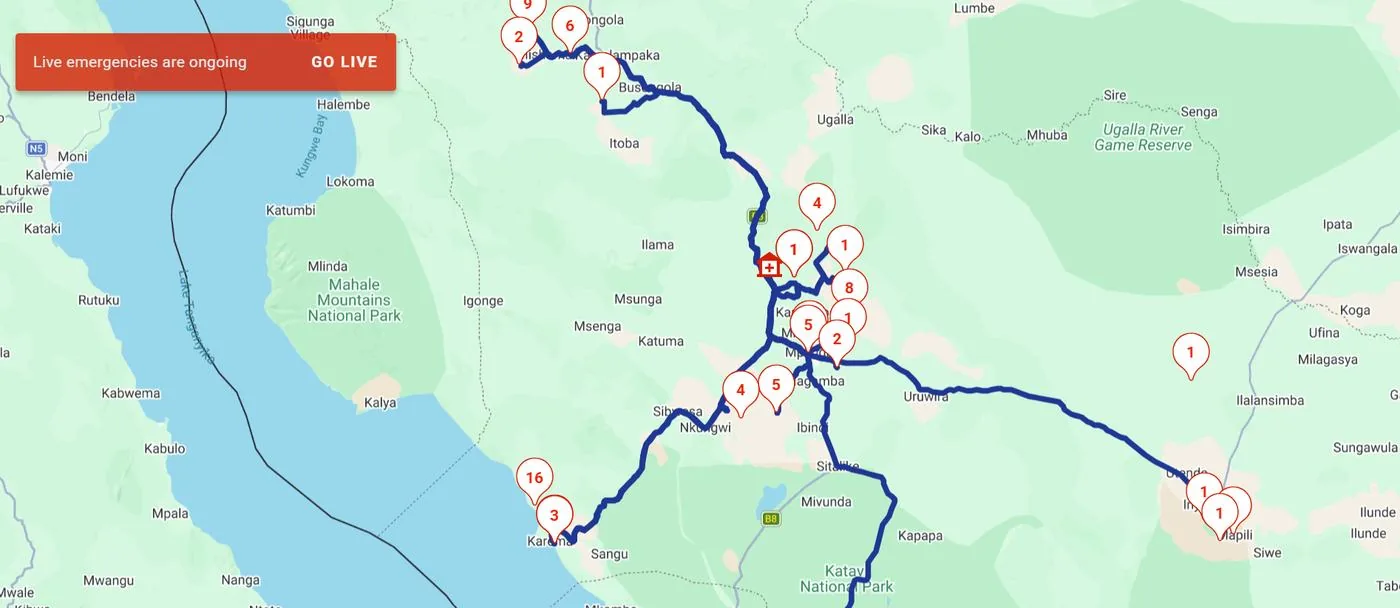
A toll-free call connects a woman, family member or health worker to a trained nurse dispatcher. The dispatcher uses a digital platform, pre-populated with carefully mapped information on facilities, referral routes and drivers, to triage the case, verify facility readiness, coordinate emergency transport through either an ambulance or registered community driver, and follow up on the outcome. Importantly, and for the first time, this ensures that the woman’s emergency transport and critical care is managed in real-time from end-to-end.

100%
of running costs paid for by the Governments of Tanzania and Lesotho
100%
coverage nationwide in Tanzania and Lesotho
The impact

Lives saved. Impact measured and verified.

Evaluations of the m-mama system, and over 10 years of operations, show that m-mama more than doubles access to emergency transport; cuts the government’s per-trip ambulance cost by a third; and reduces maternal mortality by 15% nationwide by connecting mothers in crisis to timely, appropriate emergency care.
249,426
mothers & babies transported across Tanzania and Lesotho
+118%
increase in access to maternal emergency transport
15%
nationwide reduction in maternal deaths to deliveries
33%
reduction in public ambulance costs per trip
The partners

Built with and for governments. Proven at scale.

m-mama is a partnership with governments. External funders meet the set-up costs. Governments fund the recurring costs from day one, written into national budgets before scale-up begins. The supporting platform’s full source code is transferred to the government, hosted on their own servers, giving each country complete and transparent ownership of their system without ongoing external costs. Once the system is established, m-mama’s team provides tapering advisory support over a 1-2 year period as requested by governments. Tanzania and Lesotho now cover 100% of the operating costs, running the entire service with government staff, on government servers, under government management. The m-mama system and service continue to deliver in both countries.
Live · NationalTanzania
Live · NationalLesotho
Launch · 2026Malawi
In DevelopmentEthiopia
Seeking partnersNext cohort of 6 countries

The m-mama journey

  1. Emergency

    Woman or baby in crisis at home or at a facility that can't treat them
  2. Call Toll-Free

    Connected to a nurse dispatcher
  3. Remote Triage

    Level of care confirmed via app
  4. Facility Check

    Clinical capacity verified in real time
  5. Dispatch

    Free transport — ambulance if available or community driver
  6. Treat Patient

    Stabilised and treated after safe arrival
  7. Follow-Up

    Driver paid, outcomes recorded
  8. Use of Real Time Data

    Critical real time emergency transport, referral and facility status data for government action
Interested to learn more?
Get in touch